A research-based roadmap to reduce BPA, PFAS, and microplastics in your everyday cooking tools—without overbuying.
Choosing non-toxic kitchen utensils can feel confusing because “safe” depends on material, temperature, wear-and-tear, and how you use it. At Safe Kitchen Home, we focus on evidence-led, practical guidance—so you can avoid common red flags like BPA, PFAS, and microplastics in kitchen utensils while still cooking comfortably.
This starter guide explains the most common utensil materials, what to watch for, and how to build a safer set over time.
Quick take: what “non-toxic” means here
- Lower chemical migration risk during normal cooking temperatures and typical use.
- Fewer persistent chemicals (especially PFAS) and fewer plasticizers/unknown additives.
- Durable surfaces that don’t shed easily into food (a key microplastics concern).
- Real-world practicality: easy to clean, comfortable to use, and compatible with your cookware.
Material-by-material: what’s generally safest for utensils
Stainless steel
Best for: stirring, flipping, serving, scraping (where appropriate).
Why people choose it: highly durable, no coating to wear off, easy to clean.
Watch for: scratching delicate nonstick surfaces; choose smooth edges and solid construction.
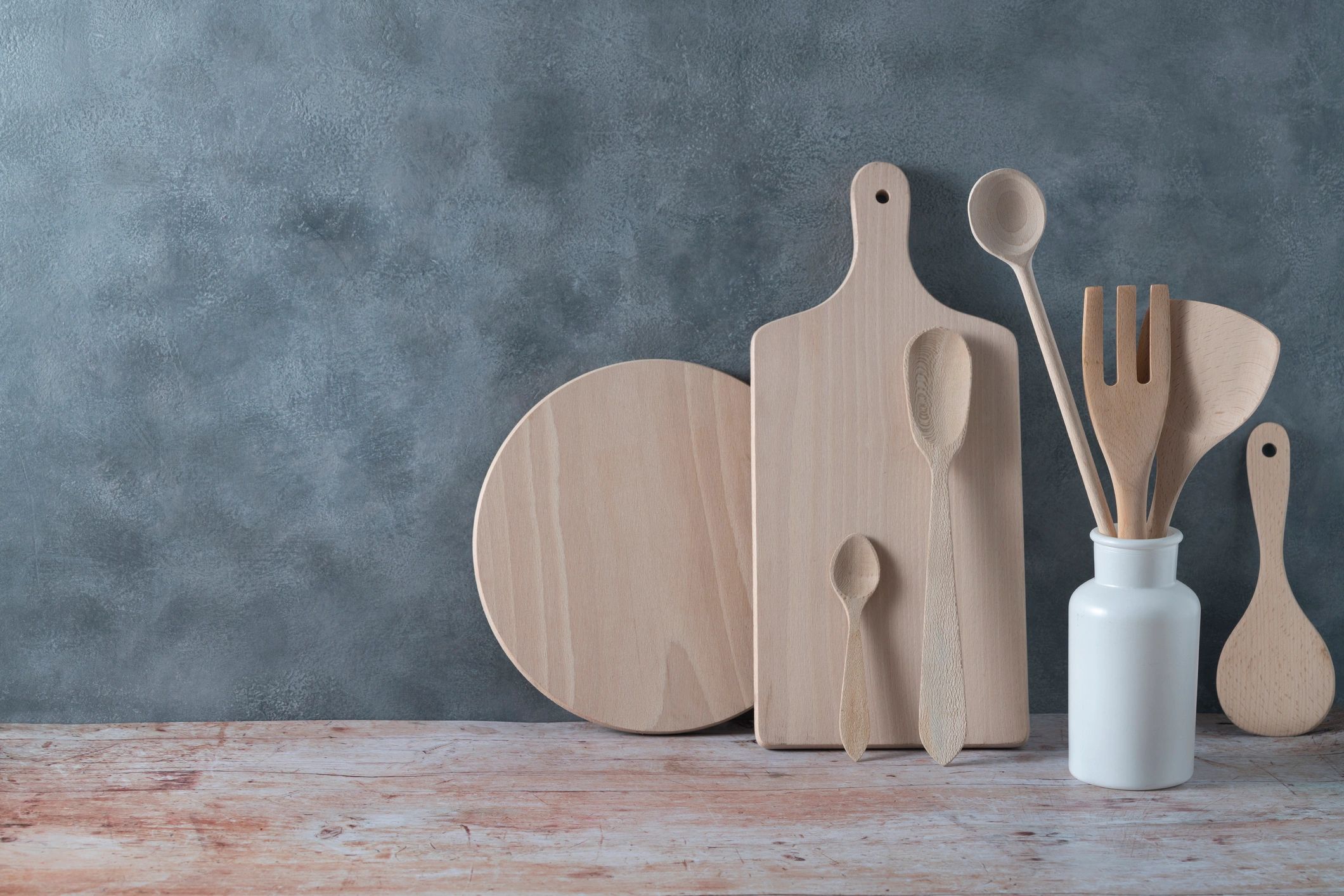
Wood (hardwoods)
Best for: stirring, sautéing, tasting, gentle scraping.
Why people choose it: plastic-free, gentle on cookware, comfortable grip.
Watch for: cracks/splinters, prolonged soaking, and finishes you can’t identify. Replace when the surface is rough or splitting.
Silicone (high-quality)
Best for: scraping bowls, folding, nonstick-friendly cooking, baking tools.
Why people choose it: flexible, heat-resistant, gentle on cookware.
Watch for: low-quality blends and fillers. If you’re comparing platinum silicone vs regular silicone, platinum-cured is often preferred for lower odor and fewer residual byproducts—but quality and brand transparency matter most.
Materials to be cautious with (and when they’re a problem)
Plastic utensils
Main concern: wear-and-tear can increase shedding and potential microplastics in kitchen utensils, especially with high heat and aggressive scraping.
If you keep them: avoid high-heat use, replace when scratched, and don’t use with very hot oil or on high-heat pans.
“Nonstick” or coated utensils
Main concern: coatings can degrade over time. If a coating is flaking, it’s a clear replace signal.
PFAS note: PFAS are more commonly discussed with cookware coatings, but we still recommend choosing PFAS free kitchen tools whenever possible and prioritizing durable, uncoated materials.
Bamboo composites
Main concern: some “bamboo” tools are bonded with resins/melamine-like binders. Heat and wear can be an issue.
Tip: look for solid bamboo/wood rather than composites, and avoid high-heat use if you can’t confirm the binder.
A simple “plastic-free kitchen guide” approach: build your set in 3 steps
Step 1: Replace the highest-heat, most-worn items first
Start with tools that touch the hottest food and get the most abrasion: spatulas, turners, stirring spoons, and ladles. These are the items most likely to scratch, melt, or shed over time.
Step 2: Match utensil material to cookware
If you use nonstick cookware, prioritize non toxic silicone cooking utensils or smooth wood to reduce scratching. If you use stainless or cast iron, stainless tools can be a durable, low-fuss option.
Step 3: Keep it minimal (and replace strategically)
A small, high-quality set is easier to keep clean and easier to replace when something wears out. Focus on the few shapes you actually use weekly.
Comparison chart: common utensil materials at a glance
| Material | Best uses | What to watch for | Replace when… |
|---|---|---|---|
| Stainless steel | High-heat cooking, serving | Scratching delicate coatings | Loose handles, sharp burrs |
| Wood (hardwood) | Stirring, sautéing | Cracks, unknown finishes | Splitting, rough surface, persistent odors |
| Silicone (high-quality) | Scraping, nonstick-friendly cooking | Odor, discoloration, low-quality blends | Tears, sticky feel, persistent odor |
| Plastic | Low-heat tasks | Scratches, heat exposure, shedding | Scratched, warped, stained |
Affiliate disclosure + how we recommend products
Some articles on Safe Kitchen Home may include affiliate links. If you buy through these links, we may earn a commission at no extra cost to you. We only recommend products we believe fit the material-safety criteria discussed in the guide, and we prioritize clear brand transparency.
Read our full policy here: Affiliate Disclosure.
What’s next
If you want to go deeper, start with our material breakdowns and side-by-side comparisons: